

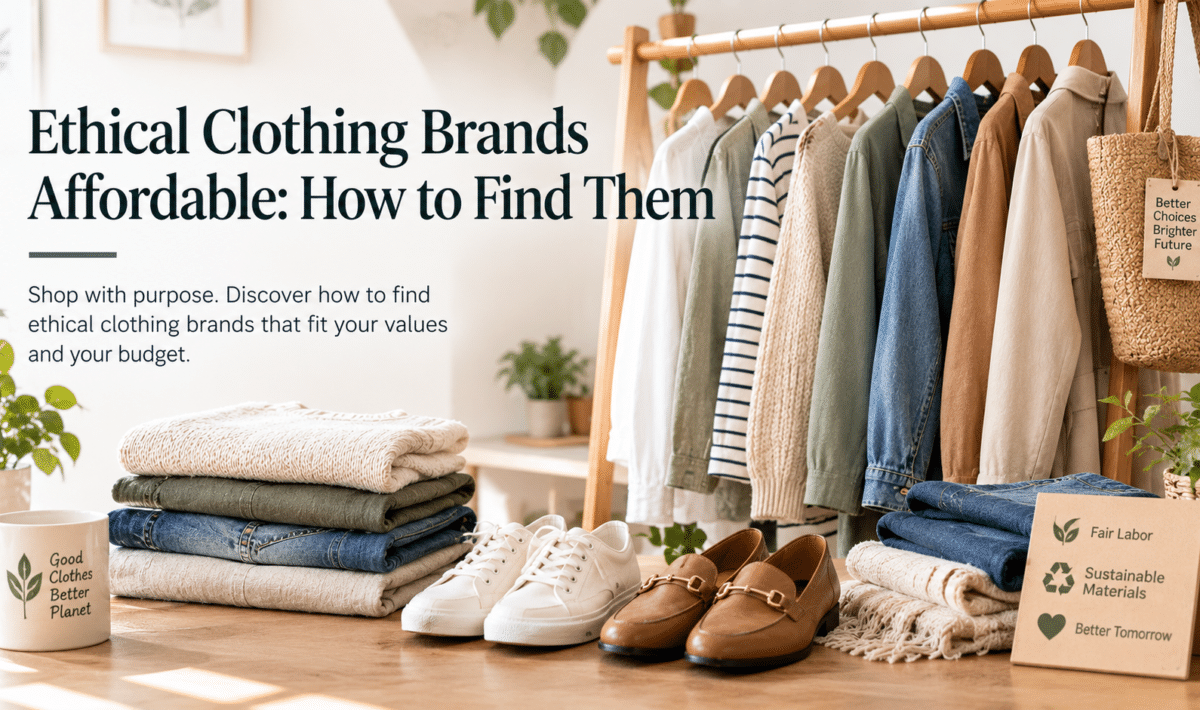
You are looking for clothes that give you satisfaction. But then the label reads “ethical” and the cost is beyond your means, and your wallet shuts down like a locked gate. You are forced to walk away and purchase the cheaper one, despite the slight feeling of guilt. This happens to many people.
If you have been looking for ethical clothing brands with affordable lines that suit the average budget, here is the reality. I won’t be naming any brands since I haven’t even researched them myself; it’s very hard to verify ethics claims and I am not going to give you unreliable information. But what I will do is give you the tools to evaluate these yourself.Facts from official sources are marked. The rest is my own view.
What “ethical” can mean
There isn’t any particular legal definition. The word encompasses a range of things, such as fair compensation and working conditions, lack of child and slave labor, environmental impact, and advertising integrity. A brand may succeed in one while failing in the other.
Before searching for ethical clothing brands within your budget range, then, it is important to establish your priorities.Worker conditions? Materials? Waste? That one choice makes the search much easier.
Why ethical clothing brands affordable to you are hard to find
However, the straightforward response would be costly, although this is my opinion only, not an actual researched fact. Fair compensation for workers, better materials, and reduced scale production will often come at a higher price than extremely fast production. The increased cost may be reflected in the tag price. However, a high price does not mean the brand is ethical, and a low price does not mean it is unethical. Cost reveals nothing about this.
There is a list maintained by the U.S. Department of Labor of products suspected to have been made with child or forced labor.The List of Goods Produced by Child Labor or Forced Labor says it covered 204 goods from 82 countries and areas as of September 5, 2024, and it includes garments and cotton. It’s a list of goods and countries, not of brands, so it can’t tell you whether one company is clean. But it shows the problem is real, which is why checking matters.
Watch for vague green claims.
Words like “eco-friendly” and “sustainable” are easy to print and hard to prove. The Federal Trade Commission (FTC) has its Green Guides, which help marketers avoid environmental claims that mislead people. The page says the guides include “general principles that apply to all environmental marketing claims” and give guidance on certifications and seals of approval. It also says the FTC is reviewing the guides, and I found no final update on that page, which was last modified in July 2026.
How does this affect you? Consider a vague assertion as something to query, rather than something to accept as evidence. The above portion is my own opinion.
Questions to ask before you trust ethical clothing brands: are they affordable or not?
Take five minutes to peruse the website of the clothing line before purchasing. Do they say where their clothes come from and who makes them? Do they give an explanation about the meaning of “ethical” for their clothing line, with facts rather than jargon? Do they give information regarding any audits, wages, or working conditions, and do they admit to their flaws?Does it name its materials? And is there an easy way to ask it a question?
A good sign is plain detail. A warning sign is a page full of leafy pictures and no facts. Claims of a certification should be checkable on the certifier’s own site. I’m not rating any label here, and I can’t say how reliable anyone is.
Make ethical clothing brands affordable with smart habits.
This is where the budget lives. The cheapest ethical choice often isn’t a new brand at all.
Buy less, wear more. A piece you wear fifty times costs less per wear than a bargain you wear twice. That idea is general money sense, and it’s my own view. Before you buy, picture three outfits you could make with it. If you can’t, skip it. Our guide to basic fashion pieces can help you choose clothes that earn their spot.
Shop secondhand first. Thrift stores, resale sites, and clothing swaps keep items in use, and they’re often cheaper. This route skips a brand’s claims entirely, which is a big plus.
Wait for sales on things you’ve already wanted.If there is a promotion on any of the brands you have studied, now could be the right time to purchase from them. Do not get into buying anything you have not planned on.
Pick out some really good basics. Some decent pants, a good tee and some good quality coat. It always works well in investing in clothes you will wear all the time, though I cannot guarantee that it will for everything.
Fixing things. Button your jeans if one comes off, wash clothes on low cycle and hang dry when you can. Clothes that last longer mean fewer clothes to buy.
Check the fit and build, even for affordable ethical clothing brands online.
If the quality of the item cannot last a month, then ethics do not matter much. Look at the seams, the weight of the cloth, and the quality of the stitches. Read customer reviews regarding the durability of the clothing after laundering them. Check out the refund policy because a bad fit that cannot be returned is a waste of time for all.
Be careful with “ethical” labels and scams.
Even searches for reasonably-priced ethical clothing companies can get you in touch with frauds. Some people take advantage of the term by making claims about why their products are expensive or poorly made. There are even those who set up fake shops using slick sites that never send anything. Look out for an actual location, contact information, and fair return policy. This is general shopping advice, not from the sources above.
Common mistakes
If you choose an ethical clothing brands affordable, believing a “green” word without any evidence is the most significant one. The other ones include spending money without verification, purchasing cheap fashion in bulk to “cover it up,” not considering the purpose of wear, and abandoning ethics just because there is no perfection. Perfect isn’t the goal, since a few better choices still count.
Your next step
Your primary concern can be written on a note – it could be wages, resources, or garbage. Pick an item you need and ask the questions above from the 5-minute guide to the brand; in case if the brand doesn’t answer, check out the second-hand stores.
For further information on how to make a dream wardrobe, visit our Outfit Inspiration articles. Choosing ethical clothing brands affordable is not that easy, but small steps make the difference..
FAQ
What do we mean by “ethical clothing?”
Ethical clothing generally means worker-friendly practices without child and/or slave labor and low impact on the environment. There is no set definition of ethical clothing under any law. So, just ask the brand.
Do you think that ethical clothes are very expensive?
They need not be. The price of an item cannot be the measure of its ethics. Second-hand repairs and less but durable items could be economical.
How can we detect greenwashers?
If you see vague terms which lack clarity, be alert! The FTC has published guidelines called the Green Guides to prevent environmental misrepresentations in marketing practices and even cover certifications and seals.
Is second-hand clothing ethical?
Certainly. It is reuse and recycling which does not involve manufacturing anything new. However, there is no need to believe the brand’s representations, especially regarding fit and quality.