

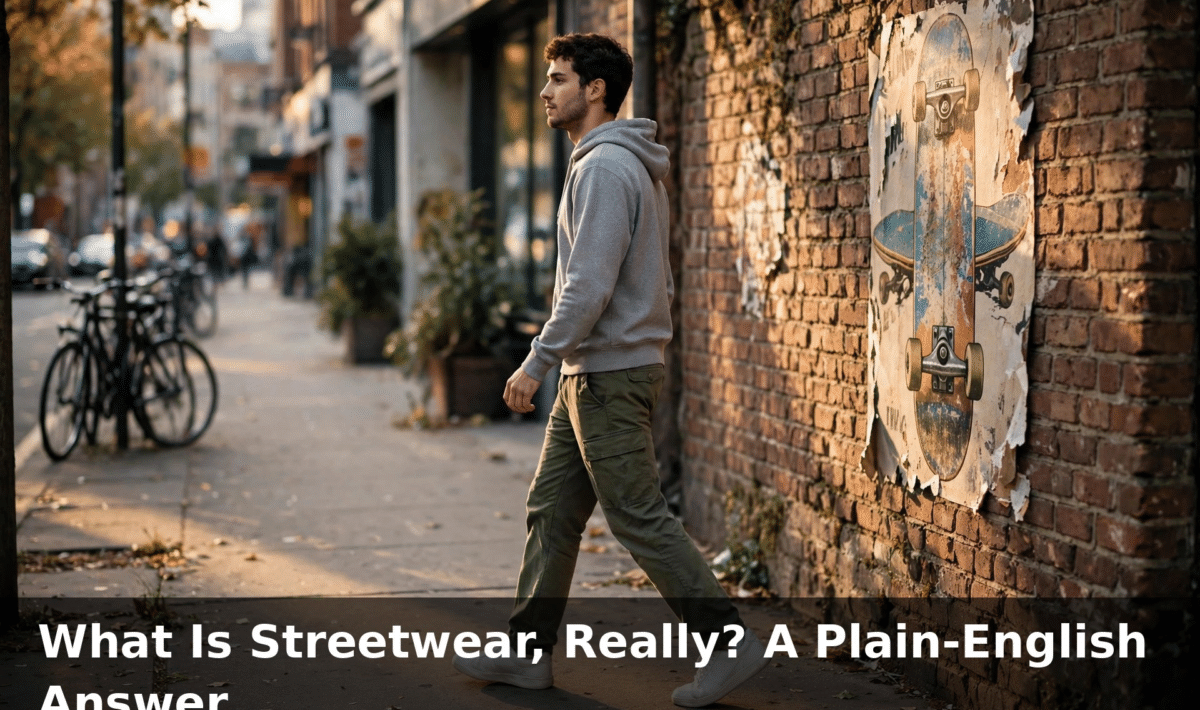
The first time someone called my outfit streetwear, I honestly thought they were teasing me. I was wearing a plain hoodie, jeans that had seen better years, and sneakers I had scrubbed with an old toothbrush that morning. That was just… my clothes. But the word stuck in my head, and down the rabbit hole I went.
So what is streetwear, in plain English? Short answer: casual clothing that grew up outside fashion — on sidewalks, skate parks and basketball courts — built around a few simple pieces worn with a bit of attitude and plenty of comfort. That’s it. No secret handshake. If you have ever pulled on a hoodie and sneakers and felt like yourself, you were most of the way there. At Tha Lifestyle, we believe streetwear is all about expressing your personality, embracing comfort, and making everyday outfits feel effortlessly stylish..
It did not come from a fashion house
This is the part I love. Most styles start with a designer sketching in a studio. Streetwear started with kids who had no money for studios. Skaters needed trousers that would not rip the second they hit concrete. Hip hop artists wore big, bold clothes that said something before they even picked up a microphone. Basketball players wanted shoes they could actually move in. And underneath it all sat workwear — the tough jackets, boots and cargo trousers made for physical jobs.
Nobody sat down and invented the streetwear meaning we use now. It just grew, the way slang grows. One city’s habits rubbed off on another’s, music videos carried the look everywhere, and by the time the fashion world noticed, the style was fully formed and not asking anyone’s permission. It belongs to ordinary people first.
The pieces that define it
Open my wardrobe and you will see the whole definition hanging there. Hoodies and sweatshirts, usually plain or with one small graphic. Heavy t-shirts with a boxy cut. Cargo trousers, straight jeans, shorts that end around the knee. Sneakers — clean ones, that matters more than the brand. A cap. In winter, a puffer or bomber jacket over everything.
Notice what is missing. No suit. No stiff shirt. Nothing that needs ironing. The streetwear style is built from clothes made to be lived in, sat on pavements in, rained on. If a piece cannot survive a normal day, it is probably not streetwear. And yes, I learned that the hard way with trousers so delicate they split the first time I crouched to tie my shoe. In public. We do not talk about those trousers.
It is not just baggy clothes
Here is where people get confused, and I got confused too. Bigger is not the same as streetwear. Early on I bought a hoodie two sizes up, thinking that was the whole trick, and I looked like a child in his father’s coat. The sleeves ate my hands. Nothing about it looked deliberate.
Real streetwear has shape, even when it is loose. The shoulder sits where it was cut to sit. The hem ends where it should. One relaxed piece gets balanced by something cleaner, so the outfit reads as a choice instead of an accident. Baggy is just a size. Streetwear is a decision. Once somebody explained that to me, half my wardrobe suddenly started working.
How it differs from high fashion
High fashion comes from the top down. A designer decides what the season looks like, the magazines announce it, the shops follow. Street style fashion works the other way round. It starts with what people actually wear on actual streets, and the designers follow that — sometimes years later, usually at ten times the price.
That is why our other guides talk about designer labels taking the look and refining the cut, while the everyday version stays simple. The runway version adds perfect stitching and a famous name. The street version keeps the soul of it: comfort, confidence, clothes that fit your real life. Do you need the expensive version to wear the style properly? No. You never did. That is the point.
Why some of it costs so much
Now, the awkward question. If streetwear is just hoodies and sneakers, why does some of it cost more than a suit? Part of it is real. Heavy fabric, better stitching and a cut that keeps its shape after twenty washes cost more to make, and a well-made hoodie will outlast three cheap ones. I have one that is five years old and still holds its line.
But part of it — let’s be honest — is hype. Limited drops, small batches, queues outside shops. Scarcity makes people want things, and brands know it. My rule is simple. Pay for fabric and fit. Never pay extra just for a logo. A price should reflect the making, not the marketing.
Why it suits ordinary life so well
I think streetwear lasted because it solves real problems. It is comfortable on a long day. It mixes and matches without effort — my black hoodie goes with every pair of trousers I own. And it does not punish you for having a normal body. The cuts are forgiving in a way skinny fashion never was.
And clothes that feel like mine — not a costume, not a uniform — change how I carry myself. Shoulders back a bit. Stride easier. You have felt that too, surely, on days when an outfit just lands right.
How a beginner can start with what they own
Please do not go shopping yet. Seriously. The best beginner streetwear outfits are probably already in your drawers, because the base pieces are the most ordinary clothes there are. Start with your plainest hoodie. Pair it with straight trousers or clean jeans, nothing torn to pieces. Finish with your cleanest sneakers — give them ten minutes with a cloth and soapy water if they need it. It changes everything.
Then look in a full-length mirror and ask one question: does this look like I chose it? If one piece looks accidental, swap it. A front tuck here, sleeves pushed up there. Small things. I spent a full month re-wearing my existing clothes in better combinations before buying a single new item, and honestly, that month taught me more than any shopping trip. When you do buy, buy one good hoodie in a neutral colour, and wear it to death.
What it is really about
Strip away the brands, the price tags and the arguments online, and what is streetwear at its core? Dressing like yourself, in public, on purpose. It came from people never invited into fashion, so they made their own version from what they had. Men’s streetwear fashion, women’s, kids dragging their boards down my street in the evening — same idea, different faces.
So do not let the word intimidate you, the way it nearly did me. You need no permission, no big budget, no wardrobe overhaul. Just a few honest pieces, worn like you mean it.
Your next step
Start tomorrow morning. Pick one outfit from what you already own — hoodie, straight trousers, clean sneakers — and wear it like a decision instead of a default. If it feels like you by the end of the day, you understand streetwear better than most articles could explain it. And if you want to go deeper, our other guides cover the fits, the brands and the outfit-building in more detail. One piece at a time. That is how this style was built, and it is how you will build yours too.
FAQ
What is streetwear in simple words?
Streetwear is casual, comfortable clothing that came from skate, hip hop, basketball and workwear culture rather than from fashion designers. Think hoodies, heavy t-shirts, cargo trousers and sneakers, worn with shape.
Is streetwear the same as baggy clothes?
No. Baggy just means loose, while streetwear pieces are cut to sit properly at the shoulder and hem even when relaxed. One loose piece balanced with cleaner pieces makes an outfit look deliberate.
Do I need expensive brands to wear streetwear?
Not at all. The style began with ordinary, affordable clothes, and fit and fabric matter far more than a logo. A plain well-fitting hoodie beats a costly one that hangs badly.
Can older men wear streetwear?
Yes, comfortably. Keep the pieces plain, colours neutral and the fit controlled — a clean sweatshirt, straight trousers and tidy sneakers suit almost any age. The style is about ease, not youth.