

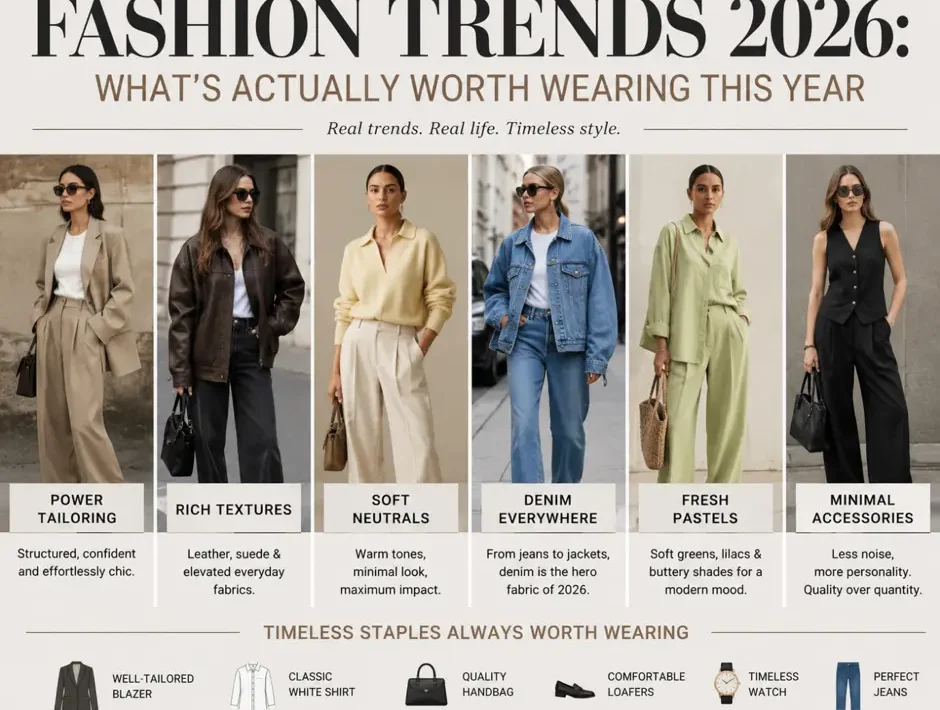
Some people check ASOS before they check their messages. First thing in the morning, before coffee, before anything just scrolling new arrivals like something important might have dropped overnight. Maybe that’s you. Right now you’ve probably got seventeen tabs open: trousers on Zara, something from & Other Stories, a vintage jacket on Depop that someone else is about to buy. Fashion in 2026 is like that. Constant. A bit relentless. Hard to keep up with.
This isn’t a list of 47 trends to immediately own. It’s a look at what’s worth paying attention to this yearend a few things you can skip, whatever the algorithm says.
Quiet luxury in 2026 isn’t what it used to be
A couple of years ago, quiet luxury was everywhere. Creamy neutrals. No logos. That very specific “I have money but I’m not going to tell you about it” energy. And for a while it worked brilliantly. It’s changed now. Not disappeared.
Quiet luxury used to be a vibe. A Pinterest boards. Cream tones, no logos, that old-money feeling you couldn’t quite name. People bought into the look. Now they’re buying into the actual thing. A cashmere jumper not because it photographs well because it’ll still be wearable in 2031. That’s a different decision. It means actually believing something is worth it, not just that it looks worth it. Most people shopping this way in 2026 have quietly made that switch.
Brands like Jigsaw and Reiss are still doing it well. A few newer UK labels make things here from decent fabrics costs more, obviously, but the cost-per-wear maths works out if you actually wear them. Smaller names like CEHTR, founded in late 2025, are building structured denim and clean jackets that won’t date.
None of this means your wardrobe needs to be beige. It just means before you spend real money, it’s worth asking: where did this come from? What’s it made of? Will I still reach for it in two years? Vague answers usually mean vague value. Find more on building a longer-lasting wardrobe at thalifestyle.com.
Y2K fashion is still here but it’s had a personality transplant
I was genuinely convinced Y2K would be done by now. It isn’t. And weirdly, I’m not annoyed about it anymore, because the version showing up in 2026 is actually wearable.
The early comeback was genuinely too much. Rhinestones on things that had no business having rhinestones. Logo belts. Micro bags that couldn’t fit a lip balm. Fun for about six months, then exhausting.
What’s happened since is that people edited it. Kept what worked, dropped the rest. One Y2K piece baguette bag, a baby tee, something slightly glossy dropped into an otherwise normal outfit. That’s enough. In the UK especially it was always a quieter revival than in the States. British style tends towards practicality even when it’s being nostalgic, so it turned into something people actually wear day to day.
Colours are worth a separate mention. After a long run of muted tones, what’s coming through this summer is loud in a very specific early-2000s way. Proper Barbie pink the real saturated shade, not the faded version. Canary yellow. Jewel tones with actual depth. One bright piece against a simple outfit reads as intentional. That’s the move.
What London runway and street style are actually saying
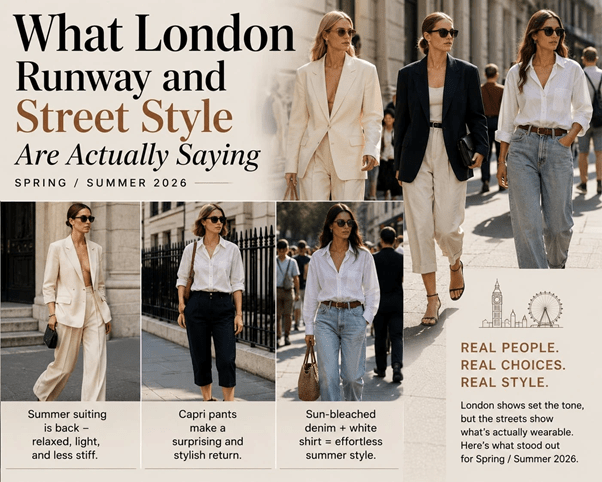
Spring summer 2026 fashion at the London shows covered a lot of ground. The catwalk is useful context. But the street style outside the venues is usually more useful day-to-day, because those are real people deciding how they want to look not stylists dressing models for a brief.
What stood out: summer suiting is back and less stiff than before. The summer tuxedo relaxed, cream or ivory, not much underneath showed up across multiple shows and actually made it to street level, which doesn’t always happen.
Capri pants had a moment that surprised almost everyone. They’ve been gone for years because the proportions are genuinely tricky too short for a trouser, too long for a shortcut in 2026, with a blazer or a simple linen shirt, they’re working. Turns out a trend just needs enough time away to feel new again.
Sun-bleached denim is everywhere. Not fake-distressed or strategically ripped just genuinely faded, like jeans worn through actual summers. A white shirt, those jeans, flat sandals. Done. If you’ve already got those things, it costs you nothing.
The 2026 clothing trends UK shoppers are buying right now
Away from the runways, indigo denim has been the most talked-about fabric story of the UK spring. It hits a sweet spot smarter than regular blue wash, less stiff than tailored trousers, more interesting than black. An indigo shirt works in most offices on a relaxed dress code day.
Suede-effect outerwear crept up without anyone making a fuss about it. Trenches in warm brown and taupe have a slightly luxurious texture that makes a coat look like it cost more than it did. Buy a suede protector if you get one. You’ll need it this is the UK.
The oversized-meets-smart thing is still going strong. A well-cut blazer with cheap trainers. A nice bag with a basic cotton tee. High and low mixed on purpose, not by accident. It has to look like a choice.
At AW26 London Fashion Week, people outside the shows were pairing track jackets with sequin skirts, windbreakers with metallic heels. On paper it reads like a mess. In person it worked. Sporty pieces keep refusing to die no matter how often people say they’re done.
Sustainable fashion 2026: this one’s not going away either
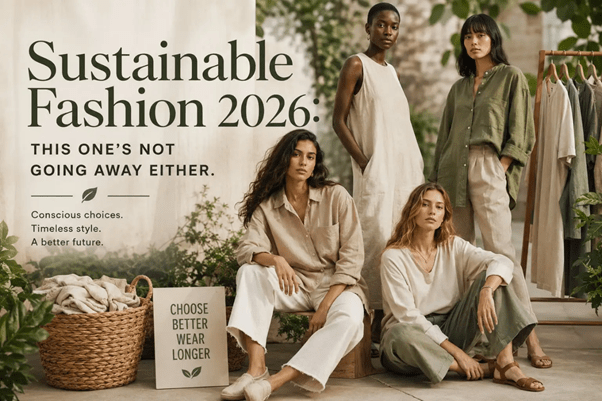
Sustainable fashion used to get a polite paragraph in trend guides and then everyone moved on. In 2026 it’s less of a topic and more of a habit for a big chunk of UK shoppers.
Vinted, Depop, eBay fashion these aren’t niche alternatives anymore for the under-35 market. They’re where people start. There’s something about a good second-hand find that new clothes can’t match. Partly the price. Partly that you’re not wearing the same jacket as 4,000 other people. Partly just the small satisfaction of beating the system slightly.
The production side is shifting too. Smaller UK labels are putting their actual costs online, naming factories, explaining where fabrics came from. Not exciting reading. But shoppers who care are starting to expect it.
Street style trends 2026: what’s on the street
Go into any UK city centre on a Saturday and you’ll see three or four completely different looks that all somehow work. Someone in full gorpcorecargo trousers, technical fleece, chunky boots. Someone right next to them in clean quiet-luxury tailoring. Someone else deep in a Y2K moment, baguette bag and all. None of it looks out of place. Worn with confidence, all of it lands.
What these outfits have in common isn’t the aesthetic. It’s that the person clearly made a decision. The ones that catch your eye aren’t the most expensive they’re just the most deliberate.
Head to thalifestyle.com for more on putting together outfits that feel like you rather than like a trend report.
What to actually skip in 2026
Logomania in the aggressive, 2018-era sense big brand names splashed across everything has aged badly. A few logos, done well, still work. A whole look built around branding reads as trying too hard. Resale prices have dropped accordingly.
Cheap matching co-Ord sets. The proportions are almost never right. The fabric feels off. You wear both pieces once together, then they live separately at the back of the wardrobe, neither one quite useful on its own. Buy the piece you actually like. Leave the other one.
How to actually dress well in 2026
Nobody says this plainly enough in fashion writing: most of what makes someone look good has nothing to do with being on-trend. It’s fit. Clothes that actually fit your body. It’s wearing your best things regularly instead of saving them for occasions that never come. It’s knowing what you’re going for relaxed or put-together, quiet or a bit loud so getting dressed in the morning is a decision, not a guessing game.
This year’s trends are genuinely good ones. Quiet luxury that’s actually about quality now. Y2K that’s finally been edited down to something wearable. Sun-bleached denim. Indigo. Second-hand as the default, not the fallback. Worth paying attention to. Not worth losing sleep over.
The best thing you’ll wear this year is probably already hanging in your wardrobe. Everything else is a bonus.
FAQ
Quiet luxury but now it’s more about actually buying quality than just looking like you did. Y2K in small doses, not full outfits. Indigo denim as a neutral. Sun-bleached denim. Suede-effect coats. And second-hand shopping isn’t a side option anymore for a lot of UK shoppers under 35, it’s the first stop.
Yes, but it’s a different beast now. One Y2K piece baby tee, a baguette bag, a low-rise cutworm with everything else looking current. The all-over Y2K look peaked a while back and hasn’t come back.
It’s quality clothing with no visible branding clean cuts, natural fabrics, nothing loud. Still relevant in 2026, but the conversation has moved. It used to be about looking understated. Now people are asking whether the thing they’re buying will actually last. That’s a shift worth noticing.
Start second-hand. Vinted and Depop are the easiest places to begin. When you do buy new, check where it was made and what it’s made of. And wear what you already have more often. Honestly, buying less is the most useful thing you can do.
Two directions. Neutral tones indigo, warm taupe, chocolate brown, cream for the quiet luxury side. And Y2K-influenced saturated colours: real Barbie pink, canary yellow, jewel tones with depth. The wearable version is one bold colour piece against an otherwise neutral outfit.
Conclusion
In 2026, the most refreshing thing about fashion is that there’s real room to do your own thing. Quiet luxury and Y2K are sitting side by side without anyone losing sleep over it. Gorpcore and sharp tailoring are standing on the same street corner and both look like they belong. The anything-goes energy that’s been building for a few years has finally landed somewhere that actually works as long as you bring some conviction to it.
The trends worth your time are solid ones. Indigo denim as a neutral. Sun-bleached jeans that look lived-in, not distressed. Suede coats in warm browns. One bold colour against an otherwise quiet outfit. None of this needs a wardrobe overhaul or a big budget. Most of it works with things you probably already own.
The people who look good this year aren’t tracking every new drop or refreshing their feeds every morning. They know what suits them, they buy it when it’s right, and they actually wear it. That’s the whole thing. Everything else is just noise. Style that lasts longer than the trend. Find it at thalifestyle.com.