

Beige. White. Gray. You’ve been grabbing these since forever. No thought required. They just work.But at some point, “easy” stops feeling like a win. You look in the mirror and it’s fine. Just fine. That’s the problem.THA Lifestyle is built around one idea you don’t have to pick between easy and good. Neutrals handle both just fine.
What Counts as a Neutral Color?
Black, white, gray, beige that’s the list most people memorize and stop at. There’s a lot more. Cream, ivory, ecru, taupe, camel, tan, chocolate brown, charcoal, navy. All neutrals. Soft sage, dusty blush, muted slate style those right and they function the same way.Here’s the actual test. Put the color on. Does it start a fight with everything else you’re wearing? Or does it just sit there quietly and let the outfit work? Quiet wins. That’s your neutral.
Warm Neutrals vs. Cool Neutrals
You’ve probably had this happen to two neutrals, one outfit, something feels wrong. Couldn’t tell you what. Just off.Temperature is almost always the culprit. Camel, tan, cream, warm brown orange and yellow undertones. Gray, true white, certain taupes pink and blue undertones.
A warm camel coat sitting next to a cool gray sweater? The two shades are working against each other. Your eye catches it even when your brain doesn’t.One rule fixes this. Same temperature, same outfit. Warm stays warm. Cool stays with cool. That’s it.
How to Mix Neutral Tones Without Looking Washed Out
Flat, dull, boring, that’s what people are scared of. So they reach for a bright color to save the outfit. Works. Shade mixing gets you further.
An all-cream look isn’t the problem, identical shades of cream are the problem. Ivory shirt. Warm eggshell pants. Oatmeal knit on the shoulders. Three different creams. The outfit has movement now. Nothing changed except the shades.
No dark anchor is another issue. Cream, white, beige all floating together with zero contrast it dissolves. Brown boots, deep tan bag, chocolate belt. Pick one. Give the look somewhere to land.
Denim. Medium wash, dark indigo, washed white all neutrals, all reliable. Cream sweater, medium-wash jeans, tan belt. Two minutes to put together. Works every single time.
The Role of Texture in Neutral Color Outfits
Some neutral outfits look like they cost a lot. Others look like nothing. Texture is almost always the difference.
Same color. Two outfits. Cashmere sweater with satin trousers that’s one look. Same sweater with ribbed joggers that’s another. A completely different feeling. Not because of the color. Because of the fabric.
Textures That Work Well Together in Neutral Outfits
Linen and cotton together are casual, easy, and work best in warm weather. A thick knit sweater over tailored wool trousers that combination holds up every single fall without getting old. Leather bag or belt against a soft woven top the contrast adds a bit of edge. Crochet or woven bag with simple basics suddenly there’s something to look at. Suede boots with a slip dress or wide-leg pants pairing almost never goes wrong.Every piece can be beige. The fabrics still make it interesting.
Neutral Colors and Your Skin Tone What Actually Works
Wrong neutral doesn’t just look bland. It makes you look tired. That’s a real difference and worth caring about.Yellow, olive, or golden undertones warm neutrals are your friends. Camel, tan, warm ivory, soft brown. Bright white pulls the life out of your face. Cream or ecru sit much better.
If you run cool pink, red, or bluish undertones go for true white, soft gray, charcoal, or cool taupe. Those work. Warm camels or anything orange-leaning can look muddy on you specifically, so watch that.Mix both and you’re flexible. Shop from either side.One fast test: fabric near your face, natural light. You look brighter? Keep it. You look drained? Put it down.
Building Monochromatic Neutral Looks
Head to toe, one color. Scary to some people. Actually one of the easiest ways to look like you know what you’re doing.
Same color doesn’t mean the same shade, that’s the whole point. Different shades of beige, not one repeated. Warmer ivory up top. Deeper sand in the pants. Rich tan leather shoes. All beige on paper. Three different beiges in practice. The differences between them are what make it look intentional rather than lazy.
Summer: cream on cream. Linen pants, light knit top, straw bag. Clean and done. All-white works but needs texture to stop it from looking blank. Interesting shoes. Woven belt. A heavier earring.
When it gets cold, go rich and dark. Chocolate turtleneck, caramel trousers, cognac boots that’s a full outfit right there. THA Lifestyle stocks pieces built for exactly that kind of dressing.
Accessories That Make Neutral Color Outfits Pop
Neutral outfit, clear canvas. Nothing competing. Whatever you add actually gets seen.
Bags tan leather, chocolate brown, woven straw. Year-round, no issues. Don’t shade-match your bag to your outfit. Too close looks like you were trying to coordinate and fell slightly short. A different tone reads as a deliberate choice.
Shoes nude or tan extends your leg line and disappears into the look. White sneakers go casual instantly. Dark brown or cognac adds richness without touching your color story. One moment of contrast? Put it in the shoes. Black boots against camels and cream sharp, not weird.
Jewelry gold with warm tones, silver with cool. Even inexpensive gold earrings against a beige sweater push the whole outfit up a notch. Worth knowing.Belt brown leather at the waist. Breaks up the monochromatic stretch, adds structure, zero new color introduced. Smallest addition, one of the bigger results.
How to Layer Neutral Clothing Without Looking Bulky
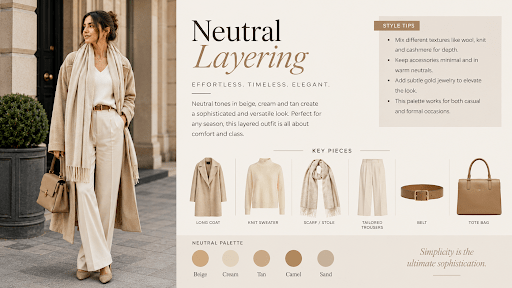
Cold weather is where neutral layering actually pays off. Most people treat layering as one decision. It’s three.
- First layer — fitted: white tee, ribbed tank, thin turtleneck.
- second layer — warmth without volume: cardigan, slim blazer, light knit.
- Third layer — now you can go bigger: oversized trench, camel coat, long blazer.
Every layer should be slightly different in weight and shade from the one before. Not dramatically just enough to read as separate pieces. One big shapeless blob of neutral is the thing you’re actively trying not to create. Our winter layering guide shows this system styled from light to heavy across five outfit examples.
Summer version: linen overshirt over a white tank. Denim jacket over a cream midi dress. Woven cardigan over a slip top. Lighter fabric, same logic.
Mistakes to Avoid with Neutral Outfits
Same fabric for every neutral matte cotton basics in beige and tan, closet full of them, nothing else. Flat every time. You need a satin piece. A knit. Something in leather. Mix it up.
Fit issues hide behind prints. They don’t hide behind neutrals. A loose beige top over wrong-fitting pants that’s all anyone sees. Neutrals don’t get the same grace period that patterns do.
Shades that fight your undertone skip them. There are enough neutrals out there that you never have to buy ones that make you look worse.
Everything matches perfectly: belt, shoes, bag, same shade. Over-coordinated. Close enough is the goal. Identical is too much.
Conclusion
Not all beiges work on everyone. Start there. Mix your fabrics. Go light to dark. One dark anchor and you’re mostly there. Accessories handle the rest.What you already own is probably closer than you think. A tan belt here, a different texture there, small swaps, big difference in how the whole thing reads. Most people are three decisions away from a neutral outfit that actually lands.Find pieces built for this kind of dressing at THA Lifestyle.
FAQ
What colors count as neutrals in fashion?
Black, white, gray, beige those are the obvious ones. Add camel, cream, tan, navy, taupe, chocolate brown, ivory, ecru, charcoal. Dusty blush, muted sage, warm slate all count depending on what you pair them with.
Can warm and cool neutrals go in the same outfit?
Technically yes. Practically be careful. When they take up equal space they tend to pull against each other. Use one as the base, bring the other in as a smaller piece. Works much better that way.
My neutral outfits always look boring. What’s wrong?
Usually texture. Try different fabrics in the same color family that alone creates interest without touching the color. And generally, lighter shades up top, heavier ones at the bottom. It’s a small thing that reads as intentional. One darker accessory can shift the whole mood of a look.
Best accessories for neutral outfits?
Tan or cognac bag. Gold earrings if you run warm, silver if you run cool. Nude or dark brown shoes.A leather belt at the waist adds shape and breaks up the monochrome no new color needed.
Which neutrals should I buy first?
Camels, cream, and warm white start there. They work with basically every other neutral and most accent color. Once you have those, add chocolate brown, charcoal, and navy for your darker pieces.