

January. You buy a top. Wear it twice. By March it’s buried at the back of a drawer. By Christmas it’s in a bin bag.Most of us have done exactly this. More than once, probably.Britain buys more clothes per person than any other country in Europe over two tonnes every single minute, according to Oxfam. Most of it doesn’t wear out.
It just gets thrown out. And somewhere between the factory floor and your wardrobe, someone paid the real price for that cheap price tag. A person. A river. Sometimes both.
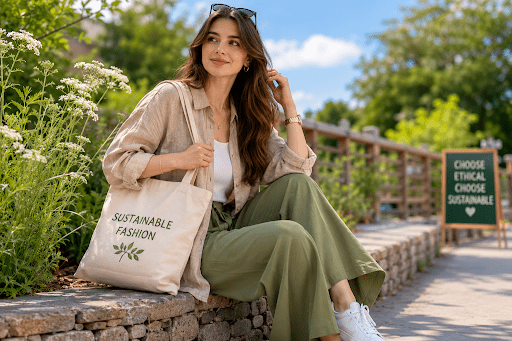
Sustainable fashion is the pushback. Not a trend. Not a marketing category. A genuine attempt to fix a system that has been quietly doing damage for decades. This is what it actually looks like in the UK — which brands are being straight about it, and what you can do without overhauling your life.
Why Fast Fashion’s Environmental Impact Is Worse Than You Think
Why Fast Fashion’s Environmental Impact Is Worse Than You Think
Fashion accounts for roughly 10% of global carbon emissions every year. More than all international flights and shipping combined. Not slightly more. Just more.
It’s also the second-biggest user of water on the planet. One pair of jeans takes 2,000 gallons to make. A cotton shirt, about 700. But most of it is not returned in the same condition.
In the United Kingdom, almost 300,000 tons of clothing are discarded in domestic garbage each year. Most of it is incinerated.
Keep Britain Tidy worked out that the carbon footprint of a single T-shirt equals watching TV for 34,000 hours. Sounds made up. It isn’t.
The pace is what gets me. Fast fashion brands used to put out two collections a year. Some now push new styles every week. Clothes get worn an average of seven to ten times before being thrown away down more than 35% in fifteen years. Quality fell. Prices fell. The volume exploded. Someone always pays for something cheap. Usually it’s a garment worker earning under £140 a month. Or a river in Bangladesh running the colour of this season’s dye. This isn’t about feeling guilty over your closet. But it’s worth knowing why “sustainable fashion” keeps coming up. It’s a reaction to an industry built on the idea that clothes are disposable.
What Sustainable Fashion Actually Means
clothing made with less environmental damage and decent treatment of the people making it, start to finish. That’s the whole thing.
It’s not about spending more. It’s not about only wearing linen and hemp like some kind of uniform. And tossing your current wardrobe to “start over sustainably” is honestly just… waste, dressed up as virtue.
When one is purchasing something, then the material is the important thing to consider. Organic cotton eliminates the synthetic pesticides and uses much lesser amount of water than normal cotton.
When one is purchasing something, then the material is the important thing to consider. Organic cotton eliminates the synthetic pesticides and uses much less water than normal cotton.
Recycled polyester means less new oil getting turned into fabric. Tencel and lyocell are wood-based, made in closed-loop systems that recover almost all the water and chemicals they use, which is rare for textile manufacturing.
Certifications matter too not because they’re flawless, but because they mean someone outside the brand actually checked. GOTS, Fair Trade, B Corp, Good On You. These aren’t just logos slapped on a label.
Then there’s transparency. Brands that publish supplier lists and factory audit results are doing something most won’t. That gap is real.
One thing worth knowing: the UK’s Competition and Markets Authority has been going after greenwashing hard since 2024. Slap “eco collection” or “conscious range” on something now and you’d better have the receipts, because regulators are actually checking. When a brand makes a big environmental claim with nothing behind it, that’s not sloppiness it’s a bet that nobody will look closely.
The Slow Fashion Movement: Buying Less, Wearing More
Once simplified, it sounds like an incredibly obvious statement: buy fewer things. It’s really as simple as that. Fewer items of higher quality which you’ll wear for years, not months.
The surprising thing is that according to WRAP, using clothing for just 9 more months reduces its carbon, water, and waste footprints by 20-30%.
Double how often you wear something and emissions drop 44%. Not from buying “better” just from actually wearing what’s already hanging in your closet.
And there’s a lot hanging in those closets. UK wardrobes are sitting on roughly 7 billion unused items right now, and most people only wear about 70% of what they own. The other 30% is just… there. The other 30% just sits there doing nothing. Using that 30% costs nothing and does more for your footprint than any purchase you could make this week.
A capsule wardrobe helps. Not as some minimalist Instagram project as a practical way to know what you own and actually reach for it. Fewer pieces that genuinely work together means less buying-to-fill-a-gap. A sustainable wardrobe isn’t a smaller fast fashion wardrobe. It’s a different relationship with clothes.
One question worth asking before any purchase: will I genuinely wear this at least 30 times? If the honest answer is probably not that’s your answer.
Eco-Friendly Clothing UK: The Meaning of the Labels
There are different labels. Here are some that are really important.
GOTS – Global Organic Textile Standard. It covers the whole production chain, starting from the organic fibres used.At least 70% of the fabric must be certified organic, and the entire supply chain dyeing, finishing, everything has to meet strict environmental and social standards. One of the harder ones to earn. One of the more trustworthy.
Fair Trade. Focused on the human side, fair wages and safe conditions. Doesn’t necessarily cover environmental factors, but it’s meaningful when you care about who made something and what they were actually paid.
B Corp. Broader than just fashion. Covers environmental performance, employee treatment, community impact, governance. Brands carrying it have been independently assessed across all of it, not just the bits they chose to highlight.
Good On You. Not a certification. A rating platform that scores brands on planet, people, and animals. Free, regularly updated, genuinely useful for a quick check. Not exhaustive, good enough to catch the obvious failures.
No certification covers everything. GOTS won’t tell you about wages. Fair Trade won’t tell you about pesticides. Use them as useful pointers. Nothing more.
Sustainable Clothing Brands UK: Who’s Actually Worth Supporting
Real brands doing real things. A few that stand up:
Finisterre. Cornish outdoor and surf brand. Recycled and organic materials throughout. B Corp certified. They repair garments, run a resale platform. Product is built to last which matters more than any certification, honestly.
Thought Clothing. Making everyday wear from bamboo, organic cotton, and hemp since the 1990s. Before caring was fashionable. That history counts.
Pantee. Takes deadstock fabric unsold rolls that would otherwise be destroyed and makes underwear and basics. They publish exactly where their materials come from. The transparency is real, not decorative.
RÆBURN. East London. Reworks surplus military fabrics and parachutes into outerwear. Genuinely interesting because it starts with existing material rather than creating anything new. The pieces are distinctive. The logic is sound.
Mother of Pearl. Higher end. Amy Powney has genuinely rebuilt the brand around responsible sourcing since 2018. Not cheap. But the quality holds up and the sourcing is documented.
Stella McCartney. No leather, no fur, no animal products since 2001. Last year they put out the world’s first plant-based feather alternative. Not a marketing claim. Actual R&D.
None of these are perfect. But they’re all doing something verifiable which puts them well ahead of most.
Secondhand Fashion UK: The Most Straightforward Option
If you want a more sustainable wardrobe without overthinking it, buy secondhand. Simplest answer going.
No new production means no new fibres, no dye processes, no factory emissions, no overseas shipping. The garment already exists. You’re just keeping it alive longer.
Vinted, Depop, and eBay have made preloved shopping easy without leaving the house. Charity shop sales in the UK have grown nearly fourfold over two decades. Mintel found 68% of UK consumers think secondhand is an affordable route to better quality. That tracks a £15 secondhand jumper from a decent brand will almost always see out a £15 new one from a fast fashion site.
Oxfam has over 550 shops across the UK. Every sale funds development and humanitarian work. British Heart Foundation, Cancer Research UK, Scope all similar. Shopping there does two good things at once.
Practical note: the platforms work differently. Vinted is high volume and price-focused.Depop is all about vintage and streetwear. eBay offers it all. Knowing what you want beforehand cuts down on time spent searching.
Circular Fashion Economy: What It Means in Practice
The concept of circular fashion economy works on trying to prevent the make-use-dispose model of clothing. Rather than going to landfills after a few uses, the clothing is made use of by repairing, selling, renting, or recycling.
A circular clothing range has been introduced by John Lewis in 2024. Take-back schemes are becoming more common. Digital Product Passports a digital record of a garment’s full materials and supply chain are rolling out across Europe, with UK regulations expected to follow.
For most people, this comes down to two things: repair and resale.
Repair first. Add just one year to a garment’s life and you cut its environmental impact by around 24%. Patagonia fixes 50,000 items a year through its Worn Wear programme. Most UK tailors handle common repairs for a few pounds. A missing button is a ten-minute job that costs almost nothing.
Rental makes sense for occasion wear specifically. HURR and By Rotation let you hire designer pieces for weddings, parties, work events rather than buying something you’ll wear once. Financially and environmentally, it stacks up.
Sustainable Style Tips: What to Do This Week
Knowing this stuff is one thing. Actually doing anything is another. Here’s what makes a genuine difference without overhauling your life.
Stop before you buy. Ask yourself do I actually need this?Already have something in my closet that serves the same purpose? Am I going to wear it 30 times? No to all of those, put it back.
Reduce washing and always cold. About 35% of ocean micro-plastics originate from the washing of synthetic clothes. Lower the temperature from 40° C to 30° C, make sure the load is full, and you’ll reduce the consumption of energy as well as the amount of released micro-plastics. Use a Guppyfriend bag when washing to collect microfibers.
Fix things instead of replacing them. Torn seam or missing button not a reason to bin it. Most UK tailors sort common repairs for next to nothing. YouTube covers the rest.
Go organic on the basics. Underwear, t-shirts, kids’ clothes worn against the skin, washed often. Worth buying organic for these specifically.
Check Good On You before you shop. 30 seconds. Gives you an independent read on a brand’s environmental and labour record.
For more ideas on dressing well without the waste, visit thalifestyle.com practical wardrobe guidance that doesn’t require becoming a sustainability expert.
The Honest Bottom Line
Sustainable fashion costs more upfront. A good organic cotton shirt is pricier than its fast fashion equivalent. Checking where something came from takes a few minutes. Buying secondhand takes patience.
But here’s the thing a wardrobe built on quality and honest sourcing actually holds together. One £60 jacket worn 200 times works out cheaper per wear than three £20 ones that fall apart before spring. Do the maths.
The UK sustainable fashion market was around £322 million in 2025. Sharp growth expected as legislation tightens and people get tired of replacing things that shouldn’t need replacing.
Cheapest starting point? Wear what you already own. More often. More carefully. Longer. And when you do need something new, thalifestyle.com has guides on building a wardrobe worth keeping.
Frequently Asked Questions
What is sustainable fashion and why does it matter in the UK?
It’s clothing made with less environmental damage and fair conditions for workers. Matters here because the UK buys more clothes per person than anywhere else in Europe and the vast majority ends up burned or buried. The scale is bigger than most people expect.
Which are the best sustainable clothing brands in the UK?
Finisterre, Thought Clothing, Pantee, RÆBURN, and Mother of Pearl all have real green credentials. Good On You rates most big brands for free worth a quick look before you buy.
Is secondhand fashion more sustainable than buying new eco-friendly clothing?
Usually yes. No new production means no new pollution, fibers, or dyes. Even the cleanest new clothing still took resources to make. Both options beat fast fashion. Doing both is even better.
What is the slow fashion movement?
Buy less, choose better, wear things longer. The point is to actually use what you own and only replace something when it’s worn out not just because something new caught your eye.
How do I start building a sustainable wardrobe without spending a lot?
Start with what’s already in your wardrobe. Wear more of it. When you need something new, check secondhand first. Pick up a basic repair skill or two. And when you do buy new one thing built to last beats three that aren’t.